One Hundred Years in the Making
Sagrada Familia's Tower of Jesus Christ Reaches Completion — and the World Is Watching
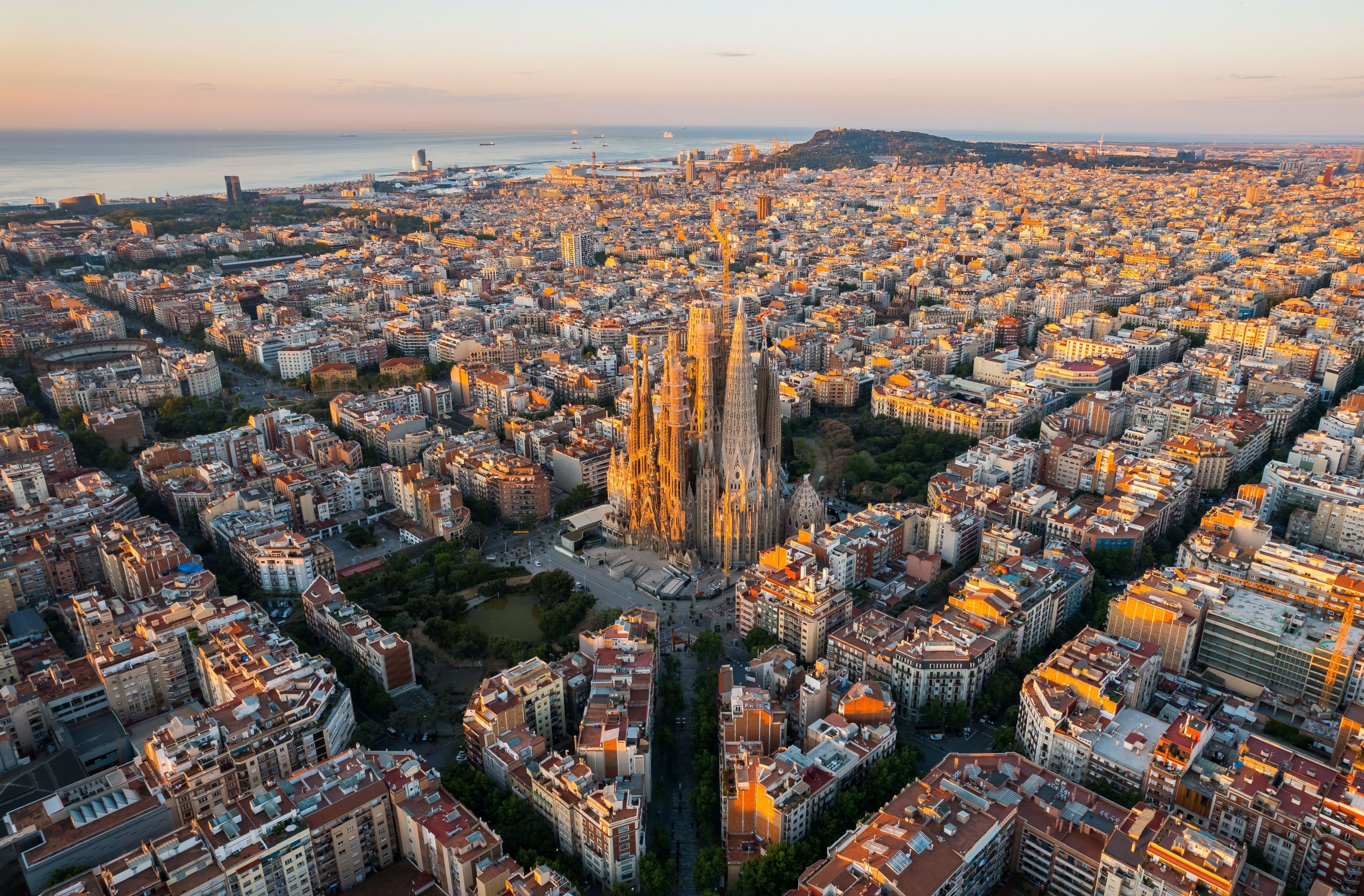
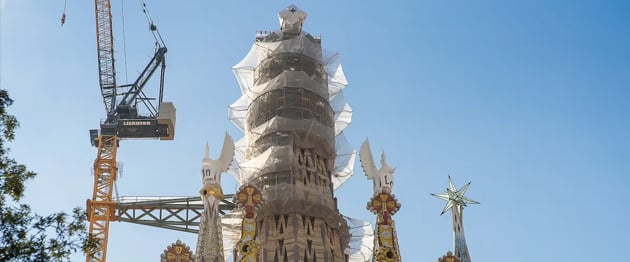
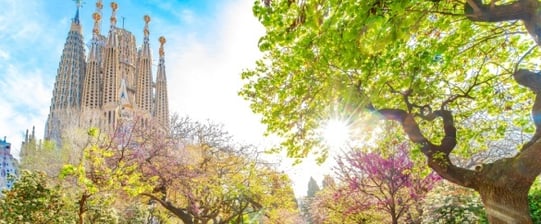
On the morning of February 20, 2026, a crane lifted the final section of a luminous cross into the sky above Barcelona. It was a quiet climax to one of history's most improbable construction stories. More than 144 years after the first stone was laid, the Tower of Jesus Christ — the tallest spire of the Basilica de la Sagrada Familia — reached its full height of 172.5 metres, and with it, the world's longest-running active construction project neared its end.
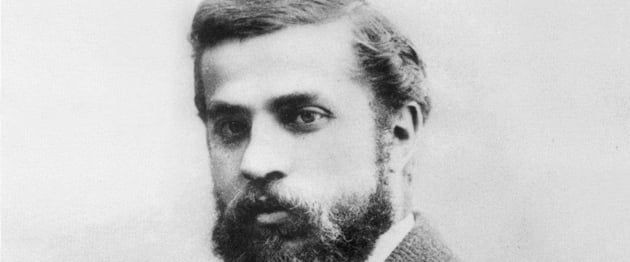
The timing was no accident. This year marks the centenary of the death of Antoni Gaudi, the visionary Catalan architect who took over the project in 1883 and dedicated his life to it until a tram struck him on a Barcelona street in 1926. He died three days later, with less than a quarter of his masterpiece complete. A century on, his dream stands finished — and the city he loved has declared 2026 its most significant year in living memory.
The Tower That Changed Everything
The completion of the Tower of Jesus Christ is more than an architectural milestone — it is a world record. At 172.5 meters, the Sagrada Familia is now the tallest church building on earth, surpassing Ulm Minster in Germany, which had held that distinction for centuries. The milestone was reached in stages: on October 30, 2025, the tower surpassed Ulm's height of 161.53 metres as a central section was hoisted into place; by February 20, 2026, the final cross was complete, standing 11 metres taller than any church that had come before it.
That cross is remarkable in its own right. Crafted from glass and white enamel tiles, it rises 17 meters above the tower's peak. Inside its upper arm, Italian artist Andrea Mastrovito installed a sculpture of the Agnus Dei — the Lamb of God — exactly as Gaudi had originally envisioned, visible from within the cross itself. At the tower's base, Latin inscriptions praise Jesus Christ in glazed ceramic tiles surrounded by palm motifs: Tu solus Sanctus, tu solus Dominus, tu solus Altissimus.
The main structural completion is expected by June 2026, though work on sculptures, decorative details, and a grand entrance stairway will continue until around 2034. But for visitors arriving in Barcelona this year, what they will see is — for the first time in history — a skyline free of construction cranes above Gaudi's great temple.
A Century of Grief, Glory, and Gaudi
Antoni Gaudi was born in 1852 in Reus, Catalonia, and graduated from the Barcelona School of Architecture in 1878. When he took over the Sagrada Familia at age 31, he transformed what had been a conventional neo-Gothic design into something entirely new: a fusion of nature, faith, mathematics, and craftsmanship that critics struggled to classify and that ordinary visitors have never forgotten.
His death was sudden and symbolic. He was struck by tram No. 30 while walking to the church, was at first mistaken for a beggar because of his plain clothing, and died on June 10, 1926. He is buried in the crypt beneath the basilica he never finished, in the Chapel of Our Lady of Mount Carmel, where visitors can still pay their respects today.
Gaudi Year 2026: A City in Celebration
For visitors choosing Barcelona this year, the city is offering something genuinely unrepeatable. Gaudi Year 2026 has been officially recognized by the Catalan and Spanish governments as a centenary commemoration, with a year-long program of exhibitions, ceremonies, cultural events, and special access across Gaudi's buildings, running from autumn 2025 through Christmas 2026.
Perhaps even more remarkably, Barcelona has simultaneously been designated World Capital of Architecture 2026 by UNESCO and the International Union of Architects (UIA). The city will host the UIA World Congress of Architects from June 28 to July 2, 2026, drawing professionals from around the globe — but the broader program is open to all visitors, with exhibitions, guided routes, and public activities designed for architecture enthusiasts of every background.
The Sagrada Familia is organizing special events throughout the year: a solemn Mass marking the exact centenary of Gaudi's death; an exhibition titled "1925–2025: One Hundred Years Since the Completion of the Tower of Bernabe" honoring the single tower Gaudi himself saw finished; and a major show tracing "144 Years of a Shared Journey" between the basilica and Barcelona. Invitations to most events have been made available to the public, though capacity is limited and advance registration is advised.
Beyond the Basilica: Barcelona's Gaudi Trail
The Sagrada Familia draws roughly 4.8 million visitors a year, but it is only the beginning of Gaudi's presence in Barcelona. A day or two spent following his work through the city's neighborhoods offers one of the richest architectural experiences available anywhere in the world.
Park Guell
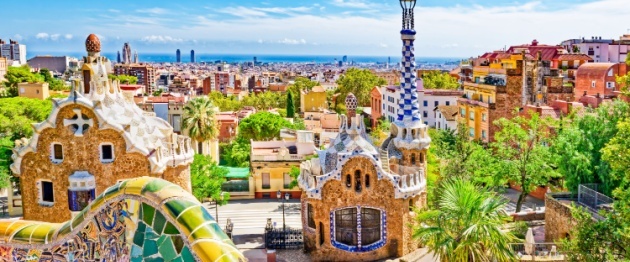
Originally conceived as a luxury housing estate, Park Guell was ultimately abandoned as a residential project, with only two houses ever built. What remains is one of the world's most joyful public parks: a hillside mosaic of colorful ceramic tiles, sinuous terraces, fairy-tale gatehouses, and sweeping views over the city to the sea. Gaudi himself lived here for nearly 20 years. The Monumental Zone requires a timed ticket and caps visitors at 400 per hour; advance booking is essential, particularly in summer.
Casa Batllo and Casa Mila
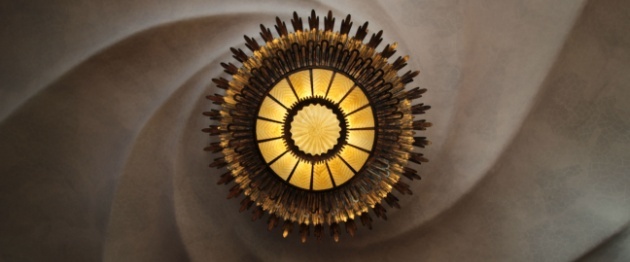
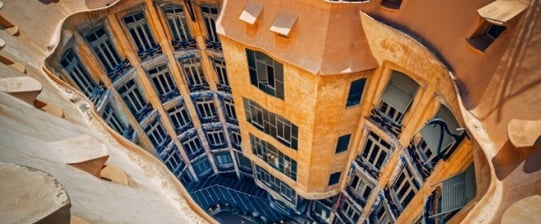
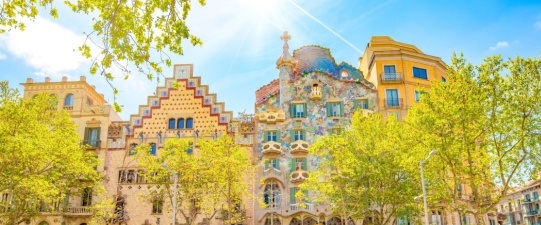
Along the elegant Passeig de Gracia stand two of Gaudi's finest domestic works. Casa Batllo — known as the "House of Bones" for its skeletal balconies and scaled roofline — was completed in 1906. Its interior dazzles with undulating ceilings, organic columns, and a central atrium glowing in deep blue. Casa Mila, known as La Pedrera (The Quarry), was the last major project Gaudi finished before devoting himself entirely to the Sagrada Familia. Its rooftop, crowded with warrior-chimney sculptures and offering views across the city, is among the most memorable in Europe.
Casa Vicens and Palau Guell
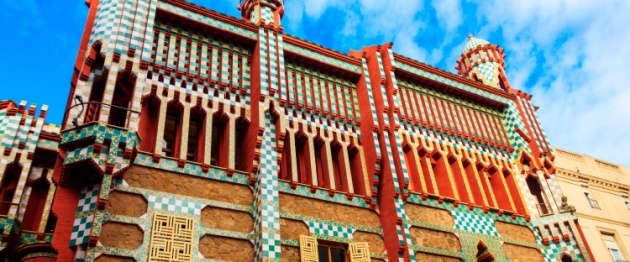
For visitors wanting to venture beyond the classic trio, Casa Vicens — the very first house Gaudi designed, opened to the public only in 2017 — offers a glimpse of his earliest ideas, marked by bold Moorish tilework and exuberant color. Palau Guell, built for his great patron in the 1880s, is a UNESCO World Heritage Site and an extraordinary study in parabolic arches, forged iron, and stone — a townhouse unlike any other.
Practical Advice for Visiting in 2026
The centenary celebrations will make 2026 an exceptionally busy year. Anyone planning a visit should book well in advance — particularly for the Sagrada Familia, where timed tickets should ideally be secured two to three months ahead. Morning slots offer cooler, bluer light through the stained glass; late-afternoon visits reward those seeking the extraordinary warm amber glow as the sun moves west.
The city's weather is most reliably pleasant in spring (April to June) and early autumn (September to October). July and August are the busiest months, with long queues and premium prices. Barcelona's metro system is efficient and affordable: the Sagrada Familia has its own stop on Line 2 (purple) and Line 5 (blue), and a single ticket costs around €2.55.
A Once-in-a-Lifetime Moment
There is something quietly astonishing about the Sagrada Familia's completion coinciding, almost to the year, with the centenary of Gaudi's death. He told his assistants the project would take generations. He left his plans deliberately incomplete, trusting that future architects and craftsmen would bring their own interpretations to bear. And so they did — across five generations, two world wars, a civil war, and a pandemic — guided by fragments of models and reconstructed blueprints and, eventually, algorithms capable of decoding geometric forms that no one had fully understood while their creator was alive.
What stands today in the Eixample district of Barcelona is, depending on your sensibility, the most extraordinary, the most baffling, or the most moving building on earth. George Orwell once called it one of the most hideous buildings in the world. Architectural critic Paul Goldberger described it as "the most extraordinary personal interpretation of Gothic architecture since the Middle Ages." Both reactions speak to the same truth: this is not a building that leaves anyone indifferent.
For travelers who have waited their whole lives to see the Sagrada Familia finished, 2026 offers that rarest of travel experiences — a moment in history that will not come again. The cranes are gone. The cross is in place. And after 144 years, the view has changed, perhaps permanently, for the better.
-RECOMMENDED AVANTI AMENITY HOTELS IN BARCELONA-
THE ONE BARCELONA
Eixample | 5-Star
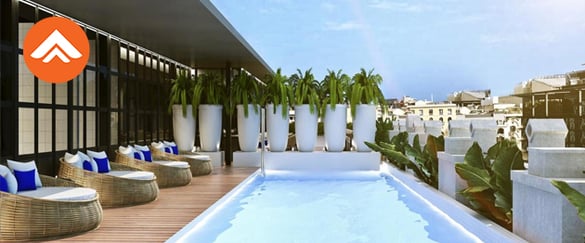
A luxury boutique hotel in the heart of Barcelona, just a short walk from the iconic Sagrada Familia, this elegant retreat blends contemporary and classic design with high-end furnishings and a warm atmosphere. Spacious rooms and suites feature plush bedding, marble bathrooms, and floor-to-ceiling city views, while guests can unwind on the rooftop terrace with a plunge pool, dine on fresh Mediterranean cuisine, or recharge at the full-service spa and fitness center. As an Avanti Advantage Amenity hotel, this property offers extra perks for our travelers. Get the details at the button below.
HOTEL H10 CUBIK
Via Laietana | 4-Star Plus
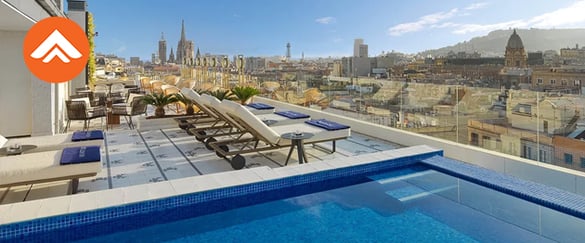
Housed in a completely renovated building in Barcelona's historic Gothic Quarter, just over 2 kilometers from the Sagrada Familia, this exclusive hotel features cutting-edge Brutalist interiors by renowned designer Lazaro Rosa-Violan, using bold geometric shapes and colors to create a striking yet welcoming atmosphere. Modern, well-appointed rooms offer gorgeous city views, while the rooftop Atik Terrace with its plunge pool provides a stunning backdrop of the Cathedral — ideal for sunset cocktails. Guests can enjoy signature tapas at the Atik Restaurant, a buffet breakfast at the Market Restaurant, or late-night drinks at the eclectic Robotik Bar. As an Avanti Advantage Amenity hotel, this property offers extra perks for our travelers. Get the details at the button below.
MONUMENT HOTEL
Passeig de Gracia | 5-Star
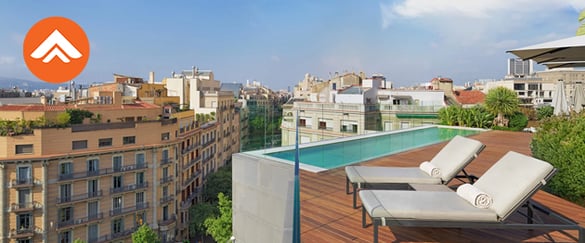
Housed in a stunning pre-modernist mansion on Barcelona's most celebrated shopping street, this iconic luxury hotel sits opposite La Pedrera and a short walk from Casa Batllo, with La Sagrada Familia just minutes away. Elegant, well-lit rooms set the tone for a stay where every detail is considered — from a rooftop terrace with a mosaic pool overlooking Passeig de Gracia, to four Michelin-starred dining under chef Martín Berasategui, to a full wellness center for complete relaxation. As an Avanti Advantage Amenity hotel, this property offers extra perks for our travelers. Get the details at the button below.
-RECOMMENDED GAUDI & LA SAGRADA FAMILIA TOURS-
SAGRADA FAMILIA WALKING TOUR
Private | 2 HoursGuests will meet their local guide near the Sagrada Familia for an unforgettable exploration of one of the world's most extraordinary architectural achievements and Barcelona's most universal symbol. Originally begun in 1882, this magnificent Catholic church was under construction for over a century, earning its distinction as the largest unfinished Catholic church in the world — a living testament to Gaudi's boundless vision and ambition, with completion having been reached in 2026. Throughout the visit, the local guide will bring the monument to life, sharing the fascinating history behind its creation, the meaning and artistry of its three remarkable facades, and the breathtaking fusion of Gothic structure with flowing Art Nouveau forms that makes the Sagrada Familia truly unlike anything else on earth.
GAUDI ARCHITECTURE TOUR
Private | 6 HoursAccompanied by a personal driver and guide, guests will explore four of Gaud's greatest masterpieces in Barcelona — the Sagrada Familia, Park Guell, and La Pedrera up close, plus Casa Batllo from the outside — witnessing firsthand his exceptional creative contribution to architecture and building technology in the late 19th and early 20th centuries, all expressed through his eclectic and deeply personal style across gardens, sculpture, decorative arts, and iconic buildings.
BARCELONA CITY TOUR AND SAGRADA FAMILIA
Private | 4 HoursSet off on a scenic tour of Barcelona's most iconic landmarks, taking in the Mediterranean shoreline at La Barceloneta, panoramic city views from Montjuic, the Olympic Port, Citadel Park, the Arch of Triumph, and the stunning facades of Casa Batllo and La Pedrera along Paseo de Gracia. The highlight of the day is a guided visit to the Sagrada Familia — Barcelona's most universal symbol — where guests will spend approximately an hour and a half marveling at its soaring spires, intricate details, and the remarkable history behind Gaudi's extraordinary masterpiece.
Ready to Send Your Clients on Their Next Great Adventure?
These hotels offer the authentic, immersive experience today's travelers are craving — and with the right planning, you can deliver unforgettable journeys that keep clients coming back for more. Find more info on destinations and featured products in the digital version of our new Europe print brochure by clicking below.
.png?width=152&height=46&name=MicrosoftTeams-image%20(10).png)



.jpg)